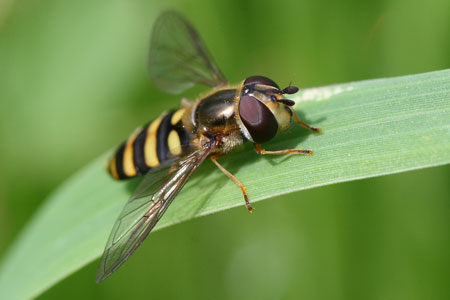
"Hoverflies, sometimes called flower flies or syrphid flies, make up the insect family Syrphidae. As their common name suggests, they are often seen hovering or nectaring at flowers; the adults of many species feed mainly on nectar and pollen, while the larvae (maggots) eat a wide range of foods. In some species, the larvae are saprotrophs, eating decaying plant and animal matter in the soil or in ponds and streams. In other species, the larvae are insectivores and prey on aphids, thrips, and other plant-sucking insects.
About 6,000 species in 200 genera have been described. Hoverflies are common throughout the world and can be found on all continents except Antarctica. Hoverflies are harmless to most other animals, despite their mimicry of more dangerous wasps and bees, which wards off predators.
Hoverflies are important pollinators of flowering plants in a variety of ecosystems worldwide.[10] Syrphid flies are frequent flower visitors to a wide range of wild plants as well as agricultural crops and are often considered the second most important group of pollinators after wild bees. However, there has been relatively little research into fly pollinators compared with bee species.[10] It is thought that bees are able to carry a greater volume of pollen on their bodies, but flies may be able to compensate for this by making a greater number of flower visits.
Like many pollinator groups, syrphid flies range from species that take a generalist approach to foraging by visiting a wide range of plant species to those that specialize in a narrow range of plants. Although hoverflies are often considered mainly non-selective pollinators, some hoverflies species are highly selective and carry pollen from one plant species. ...
Many syrphid fly species have short, unspecialized mouth parts and tend to feed on flowers that are more open as the nectar and pollen can be easily accessed."
~Wikipedia.org
This company makes flying cameras: www.hoverflytech.com
This website gives a great deal more information on the nature and nomenclature of the hoverfly, and includes a picture of the larvae.
This Wikipedia article talks about the Sikorsky R-4/Hoverfly helicopter, "the first helicopter used by the United States Army Air Forces..."
