Happy Wednesday!
"The rusty-spotted cat (Prionailurus rubiginosus) is one of the cat family's smallest members, and is found only in India and Sri Lanka. It has been listed as Vulnerable by IUCN in 2002 as the total effective population size is estimated at below 10,000 mature individuals, with a declining trend due to habitat loss, and no subpopulation containing more than 1,000 mature breeding individuals.
The rusty-spotted cat rivals the black-footed cat as the world's smallest wild cat. It is 35 to 48 cm (14 to 19 in) in length, with a 15 to 30 cm (5.9 to 11.8 in) tail, and weighs only 0.9 to 1.6 kg (2.0 to 3.5 lb). The short fur is grey over most of the body, with rusty spots over the back and flanks, while the underbelly is white with large dark spots. The darker colored tail is thick and about half the length of the body, and the spots are less distinct. There are six dark streaks on each side of the head, extending over the cheeks and forehead.
Rusty-spotted cats have a relatively restricted distribution. They mainly occur in moist and dry deciduous forests as well as scrub and grassland, but are likely absent from evergreen forest. They prefer dense vegetation and rocky areas.
Very little is known about ecology and behaviour of rusty-spotted cats in the wild. Captive ones are mostly nocturnal but also briefly active during the day. Most wild ones were also recorded after dark. Several individuals were observed hiding in trees and in caves.
They feed mainly on rodents and birds, but may also hunt lizards, frogs, and insects. They hunt primarily on the ground, making rapid, darting movements to catch their prey. They apparently venture into trees to escape larger predators. Captive females and males both scent-mark their home range by spraying urine."
~Wikipedia.org
Wednesday, July 29, 2015
Goodbye, Facebook
On July 21, I deactivated my Facebook account. I cannot tell you how much it disturbs me that I do not have the authority to delete my account, but must simply make it inactive, as though it I'm on vacation and will surely be back to continue on as normal.
Which is one reason I deactivated my account; I am sick and tired of Facebook's psychological games.
The deactivation page required that I choose one, and only one, of the following:
Did I mention that I'm tired of their psychological games?
I chose the "Other" option and wrote in the accompanying text box:
"I have concluded that Facebook is no longer a responsible member of my culture and community. Facebook has increasingly encroached on my privacy for the sole purpose of furthering it's own means and has legitimized pornography and the solicitation of prostitution. Facebook has made it clear to me that it has no desire to help people, contribute to or help stabilize legitimate, healthy communities. I don't need Facebook and Facebook certainly does not need me. We have come to the end of this relationship. Farewell."
I will not miss Facebook. I regret the distance, individualism and mass communication that our culture has decided are vital to existence, but Facebook hasn't, and won't, solve those problems. Those ruts are deep and have been in the making for the past five centuries. The philosophical, economic and political overhauls necessary to address the issues of our modern world will only be enacted through personal relationships, and you can't get that via mass communications and social media.
Social sites like Facebook advertise themselves as being able to reunite users with old friends and acquaintances, and let users branch out into wider social circles via their friend's friends. But there are two things that social sites have to ignore into order to keep their users: a) everyone has a friend limit, and b) personal maturation requires moving on. I learned in Psychology 101 that everyone has a limit to the number of people they can interact with on a regular basis. That number is flexible and corresponds to personalities, with introverts requiring fewer friends than extroverts. The average number of acquaintances, friends and close friends that a person can have is ~150. Facebook, and other social media sites, depend on their users increasing their relationship circles beyond that number, and I classify that as corporate abuse. Push, wiggle, cajole, bribe, lie, weasel and manipulate, they are determined to make it look like surrendering one's sanity to their demands will be fun and/or beneficial. I have yet to see a case where it is.
Leaving the past and walking into the future has been a challenge for humanity since the Fall. Grieving the apparent loss of college friends was soothed by the idea that I could poke them, or write on their walls, or send them messages. But the truth is that those relationships died because of distance, even if I lived in denial. There was nothing personal, nothing real, about the way we stalked each other's Facebook pages, scanning gobs of content for something that would make our brains release endorphins. It was fun. And shallow. Over time I realized that I didn't know those people anymore, even though I care so much about them. And I knew that they didn't know me.
Zombie relationships are dead with some semblance of life allowing us to trick ourselves to believing that they are truly alive. It is so hard to let go of a good thing and reach out into the unknown for something as deeply personal and terrifyingly dangerous as a relationship with another human being. It is so much easier to trick ourselves into thinking that time and distance haven't changed anything, and that we don't have to let go of things, and people, that we value. But the zombie relationships I had on Facebook were sapping my time and emotional energy, stealing away what was due to the people with whom I live, work and worship. Feeding zombies is easy, but it is not what God has made us for. We are called to *live*, to grow, risking ourselves on the frontier of a dynamic and self-sacrificial relationship with God. There is a time for everything, and everyone. And when I must part ways with a dear Christian friend, I must take comfort in the knowledge that I will see them again. One day......
But enough ranting for now. You all are here, I value you! I'm intending to spend more time on the phone and writing personal letters, so we'll see how that goes. Blessings!
Which is one reason I deactivated my account; I am sick and tired of Facebook's psychological games.
The deactivation page required that I choose one, and only one, of the following:
- I don't feel safe on Facebook.
- I don't find Facebook useful.
- I have another Facebook account.
- I spend too much time using Facebook.
- I have a privacy concern.
- My account was hacked.
- This is temporary. I'll be back.
- I don't understand how to use Facebook.
- I get too many emails, invitations, and requests from Facebook.
- Other, please explain further:
Did I mention that I'm tired of their psychological games?
I chose the "Other" option and wrote in the accompanying text box:
"I have concluded that Facebook is no longer a responsible member of my culture and community. Facebook has increasingly encroached on my privacy for the sole purpose of furthering it's own means and has legitimized pornography and the solicitation of prostitution. Facebook has made it clear to me that it has no desire to help people, contribute to or help stabilize legitimate, healthy communities. I don't need Facebook and Facebook certainly does not need me. We have come to the end of this relationship. Farewell."
I will not miss Facebook. I regret the distance, individualism and mass communication that our culture has decided are vital to existence, but Facebook hasn't, and won't, solve those problems. Those ruts are deep and have been in the making for the past five centuries. The philosophical, economic and political overhauls necessary to address the issues of our modern world will only be enacted through personal relationships, and you can't get that via mass communications and social media.
Social sites like Facebook advertise themselves as being able to reunite users with old friends and acquaintances, and let users branch out into wider social circles via their friend's friends. But there are two things that social sites have to ignore into order to keep their users: a) everyone has a friend limit, and b) personal maturation requires moving on. I learned in Psychology 101 that everyone has a limit to the number of people they can interact with on a regular basis. That number is flexible and corresponds to personalities, with introverts requiring fewer friends than extroverts. The average number of acquaintances, friends and close friends that a person can have is ~150. Facebook, and other social media sites, depend on their users increasing their relationship circles beyond that number, and I classify that as corporate abuse. Push, wiggle, cajole, bribe, lie, weasel and manipulate, they are determined to make it look like surrendering one's sanity to their demands will be fun and/or beneficial. I have yet to see a case where it is.
Leaving the past and walking into the future has been a challenge for humanity since the Fall. Grieving the apparent loss of college friends was soothed by the idea that I could poke them, or write on their walls, or send them messages. But the truth is that those relationships died because of distance, even if I lived in denial. There was nothing personal, nothing real, about the way we stalked each other's Facebook pages, scanning gobs of content for something that would make our brains release endorphins. It was fun. And shallow. Over time I realized that I didn't know those people anymore, even though I care so much about them. And I knew that they didn't know me.
Zombie relationships are dead with some semblance of life allowing us to trick ourselves to believing that they are truly alive. It is so hard to let go of a good thing and reach out into the unknown for something as deeply personal and terrifyingly dangerous as a relationship with another human being. It is so much easier to trick ourselves into thinking that time and distance haven't changed anything, and that we don't have to let go of things, and people, that we value. But the zombie relationships I had on Facebook were sapping my time and emotional energy, stealing away what was due to the people with whom I live, work and worship. Feeding zombies is easy, but it is not what God has made us for. We are called to *live*, to grow, risking ourselves on the frontier of a dynamic and self-sacrificial relationship with God. There is a time for everything, and everyone. And when I must part ways with a dear Christian friend, I must take comfort in the knowledge that I will see them again. One day......
But enough ranting for now. You all are here, I value you! I'm intending to spend more time on the phone and writing personal letters, so we'll see how that goes. Blessings!
LaVoice Update - We're on the Move!
Hello, Special People!
Logan, Andrew and I have received the invitation to move in with and rent rooms from a young couple in our congregation, the Benedettis. They will be preparing their house to receive us over the next two weeks and we plan to move on Aug 8th. The things that we will not be able to take with us will live in a storage unit.
The hope is that we will be able to work with this arrangement until we can save up enough money to buy a house. As it is, the new management of our apartment complex is raising the rent every year and we won't be able to put aside enough to save up for house if we stay where we are.
Please pray for both parties as we make carpooling, food, laundry, TV time, furniture and chore arrangements, and that the stress of this major change will not strain the relationship.
We are really excited to moving back to the vicinity of our church family and look forward to spending more time with them!
Logan, Andrew and I have received the invitation to move in with and rent rooms from a young couple in our congregation, the Benedettis. They will be preparing their house to receive us over the next two weeks and we plan to move on Aug 8th. The things that we will not be able to take with us will live in a storage unit.
The hope is that we will be able to work with this arrangement until we can save up enough money to buy a house. As it is, the new management of our apartment complex is raising the rent every year and we won't be able to put aside enough to save up for house if we stay where we are.
Please pray for both parties as we make carpooling, food, laundry, TV time, furniture and chore arrangements, and that the stress of this major change will not strain the relationship.
We are really excited to moving back to the vicinity of our church family and look forward to spending more time with them!
Monday, July 20, 2015
Have an Aye-Aye
Happy Monday!
The aye-aye (Daubentonia madagascariensis) is a lemur, a strepsirrhine primate native to Madagascar that combines rodent-like teeth and a special thin middle finger.
It is the world's largest nocturnal primate, and is characterized by its unusual method of finding food; it taps on trees to find grubs, then gnaws holes in the wood using its forward slanting incisors to create a small hole in which it inserts its narrow middle finger to pull the grubs out. This foraging method is called percussive foraging. The only other animal species known to find food in this way is the striped possum. From an ecological point of view the aye-aye fills the niche of a woodpecker, as it is capable of penetrating wood to extract the invertebrates within.
The aye-aye is the only extant member of the genus Daubentonia and family Daubentoniidae. It is currently classified as Endangered by the IUCN; and a second species, Daubentonia robusta, appears to have become extinct at some point within the last 1000 years.
The aye-aye is a nocturnal and arboreal animal meaning that it spends most of its life high in the trees. Although they are known to come down to the ground on occasion, aye-ayes sleep, eat, travel and mate in the trees and are most commonly found close to the canopy where there is plenty of cover from the dense foliage. During the day, aye-ayes sleep in spherical nests in the forks of tree branches that are constructed out of leaves, branches and vines before emerging after dark to begin their hunt for food. Aye-aye are solitary animals that mark their large home range with scent. The smaller territories of females often overlap those of at least a couple of males. Male aye-ayes tend to share their territories with other males and are even known to share the same nests (although not at the same time), and can seemingly tolerate each other until they hear the call of a female that is looking for a mate."
~Wikipedia.org
And a human for scale
It is the world's largest nocturnal primate, and is characterized by its unusual method of finding food; it taps on trees to find grubs, then gnaws holes in the wood using its forward slanting incisors to create a small hole in which it inserts its narrow middle finger to pull the grubs out. This foraging method is called percussive foraging. The only other animal species known to find food in this way is the striped possum. From an ecological point of view the aye-aye fills the niche of a woodpecker, as it is capable of penetrating wood to extract the invertebrates within.
The aye-aye is the only extant member of the genus Daubentonia and family Daubentoniidae. It is currently classified as Endangered by the IUCN; and a second species, Daubentonia robusta, appears to have become extinct at some point within the last 1000 years.
The aye-aye is a nocturnal and arboreal animal meaning that it spends most of its life high in the trees. Although they are known to come down to the ground on occasion, aye-ayes sleep, eat, travel and mate in the trees and are most commonly found close to the canopy where there is plenty of cover from the dense foliage. During the day, aye-ayes sleep in spherical nests in the forks of tree branches that are constructed out of leaves, branches and vines before emerging after dark to begin their hunt for food. Aye-aye are solitary animals that mark their large home range with scent. The smaller territories of females often overlap those of at least a couple of males. Male aye-ayes tend to share their territories with other males and are even known to share the same nests (although not at the same time), and can seemingly tolerate each other until they hear the call of a female that is looking for a mate."
~Wikipedia.org
Saturday, July 18, 2015
My Continued Adventures with the No Carb Diet
So. Today starts my 11th day on the No Carb Diet.
It's really isn't all that bad, actually. I can eat all my favorite foods except bread, some fruits and desert. Since I don't really care for a ton of variety in my diet, its been quite nice. I eat two eggs with cheese for breakfast, and a salad of spinach, kale and chard with nuts, seeds, dried cranberries, cheese, a hard boiled egg and a vinaigrette dressing for lunch. The dried fruit has the highest content of carbs in my diet, but it makes the salad most enjoyable and provides other nutrients.
Dinner is chicken with cooked green peppers, onions, mushrooms and seasonings, sour cream, salsa, and guacamole; ham with savory green beads (mom recipe is the best!); pot stickers with the sauce (I think I ate, like, nine of them. We get a four pound bag for $11 from Costco); plain yogurt with berries; plain yogurt with raw oats, honey, cinnamon, roasted edamame and pumpkin seeds; or a shot of raw, unpasteurized apple cider vinegar (we only did this once and have no desire to do it every again.)
Logan has acquired humus and chips for snacks, since snacks are rather necessary on this diet. The chips are a corn base with quinoa and black beans, or a corn base with pumpkin seeds. The second tastes so much like pumpkin pie that I eat them for desert. Hard boiled eggs sprinkled with salt or soy sauce is also a tasty snack, and I'll occasionally drink the raw, unpasteurized apple cider vinegar the proper way- diluted with water and sweetened with honey.
I'm hoping that tea becomes a more regular enjoyment for me, though it will be rather expensive. I've just learned that tea plants absorb fluoride out of the soil they grow in as an anti-chomp-me mechanism. Apparently, animals who eat the leaves get stomach aches and cease using that plant as a food source. For humans, fluoride can be toxic and cause all sorts of maladies, and drinking too much tea can dangerous. However, there is an apparent distinction between expensive tea and cheap tea because of how long the leaves are on the plant- high end teas are made from young leaves and buds, while cheap tea is made from old or fallen leaves. Therefore, I'll not be drinking two gallons a day, but a cup or two should be quite lovely.
My energy levels are up and I don't crash nearly as hard when I get home from work. My body feels light, much less bloated, and like I can do the things I want to do. My depression has lifted a great deal, and I'm actually doing the things I've been saying I want to do for the past several months. I'm communicating with people more frequently and loosing my train of thought less often. My muscles ache less and I don't have the urge to turn into a caffeinated squirrel quit as often. I believe I may still be losing weight, but I've no way of really measuring that (no bathroom scale and I lost my sewing tape).
I just had an apple. It was tasty.
We have an ice cream date planned for next week. I think a sugar high every once in a while is acceptable. After all:
"This is what I have observed to be good: that it is appropriate for a person to eat, to drink and to find satisfaction in their toilsome labor under the sun during the few days of life God has given them--for this is their lot."
~Ecc. 5:18
It's really isn't all that bad, actually. I can eat all my favorite foods except bread, some fruits and desert. Since I don't really care for a ton of variety in my diet, its been quite nice. I eat two eggs with cheese for breakfast, and a salad of spinach, kale and chard with nuts, seeds, dried cranberries, cheese, a hard boiled egg and a vinaigrette dressing for lunch. The dried fruit has the highest content of carbs in my diet, but it makes the salad most enjoyable and provides other nutrients.
Dinner is chicken with cooked green peppers, onions, mushrooms and seasonings, sour cream, salsa, and guacamole; ham with savory green beads (mom recipe is the best!); pot stickers with the sauce (I think I ate, like, nine of them. We get a four pound bag for $11 from Costco); plain yogurt with berries; plain yogurt with raw oats, honey, cinnamon, roasted edamame and pumpkin seeds; or a shot of raw, unpasteurized apple cider vinegar (we only did this once and have no desire to do it every again.)
Logan has acquired humus and chips for snacks, since snacks are rather necessary on this diet. The chips are a corn base with quinoa and black beans, or a corn base with pumpkin seeds. The second tastes so much like pumpkin pie that I eat them for desert. Hard boiled eggs sprinkled with salt or soy sauce is also a tasty snack, and I'll occasionally drink the raw, unpasteurized apple cider vinegar the proper way- diluted with water and sweetened with honey.
I'm hoping that tea becomes a more regular enjoyment for me, though it will be rather expensive. I've just learned that tea plants absorb fluoride out of the soil they grow in as an anti-chomp-me mechanism. Apparently, animals who eat the leaves get stomach aches and cease using that plant as a food source. For humans, fluoride can be toxic and cause all sorts of maladies, and drinking too much tea can dangerous. However, there is an apparent distinction between expensive tea and cheap tea because of how long the leaves are on the plant- high end teas are made from young leaves and buds, while cheap tea is made from old or fallen leaves. Therefore, I'll not be drinking two gallons a day, but a cup or two should be quite lovely.
My energy levels are up and I don't crash nearly as hard when I get home from work. My body feels light, much less bloated, and like I can do the things I want to do. My depression has lifted a great deal, and I'm actually doing the things I've been saying I want to do for the past several months. I'm communicating with people more frequently and loosing my train of thought less often. My muscles ache less and I don't have the urge to turn into a caffeinated squirrel quit as often. I believe I may still be losing weight, but I've no way of really measuring that (no bathroom scale and I lost my sewing tape).
I just had an apple. It was tasty.
We have an ice cream date planned for next week. I think a sugar high every once in a while is acceptable. After all:
"This is what I have observed to be good: that it is appropriate for a person to eat, to drink and to find satisfaction in their toilsome labor under the sun during the few days of life God has given them--for this is their lot."
~Ecc. 5:18
Thursday, July 16, 2015
Why the Chattanooga Shootings Didn't Phase Me
The news of the shootings in my home town was all over facebook and, I'm sure, local and national news sites. I have to say "I'm sure" because I haven't checked. I haven't checked because I honestly don't care to.
But why?!? How can I be so unconcerned with sudden and violent death in my home town?!?
Multiple reasons.
A) In 2013, the estimated population of Chattanooga was 173,366. With that many people in one place, our country becoming more openly godless and political propaganda destroying our ability to think intelligently, there are bound to be violent deaths in that city. And, I would add, those deaths will either become more frequent or we will lose more of our freedoms.
B) That city has spent decades stomping on its homeless and ignoring its gangs. It's lovely parks and art displays are beautiful, but they are only half the story, and that other half has been carefully squirreled away into skeleton-filled closets and out of the public eye. Chattanooga is not healthy, and this is one isolated instance of its mortal disease.
C) People in Chattanooga own guns. Wherever people are allowed to own guns, there will inevitably be some people who will abuse guns.
D) There is a highly organized, extremely functional organization on this planet that is skillfully playing a game toward world domination. The Romans and Mongols have nothing on this army when it comes to tactics and playing the long game. And considering America's short attention span, we don't stand a chance of winning.
I know these facts, and the event today did not surprise me nor did it terrify me. In a population of that size, my family and friends are not likely to be affected. In a world gone so wrong, wrongs are likely to happen.
Do I care? As much as one can 300+ miles away and incapable of assistance. Will I contact my family and ask if they are okay? Sure. Now that I'm sure it's all over.
People have asked me to care a lot about what happened today. But I wonder... Do you care that hundreds of thousands of our babies are murdered every year? Do you care that hundreds of thousands of "criminals" are abused inside and outside of the system because we, as a people, refuse to deal with sin and guilt in a godly manner? Do you care that the American church is as dysfunctional as the average American family (~20 million children living in a single parent home)?
Death is everywhere, every day, all the time. Whether it is the hidden death of being murdered in the womb, or the slow death of being tormented and dehumanized for years inside a concrete and steal building, or the unnecessary death caused by ignorance and pride, death is a part of our daily lives.
Why should I care more about this one sudden indecent than all the rest? Why would I suddenly be moved to donate blood for this one person if I cannot be moved to be charitable from principle? What does it say about me if I react to violent sin with more gusto than to the gnawing, aching, grinding, whining sin that desires to control my life every day? What does it say about me if I allow one type of sin to touch my heart and ignore the suffering caused by every other types of sin?
Let me quote from C. S. Lewis, for I'm sure he can make the point better than I. In one of his letters, Uncle Screwtape is advising his protege on how to best befuddle his subject's attitudes:
"As regards his more general attitude to the war, you must not rely too much on those feelings of hatred which the humans are so fond of discussing in Christian, or anti-Christian, periodicals. In his anguish, the patient can, of course, be encouraged to revenge himself by some vindictive feelings directed towards the German leaders, and that is good so far as it goes. But it is usually a sort of melodramatic or mythical hatred directed against imaginary scapegoats. He has never met these people in real life—they are lay figures modelled on what he gets from newspapers. The results of such fanciful hatred are often most disappointing, and of all humans the English are in this respect the most deplorable milksops."
"They are creatures of that miserable sort who loudly proclaim that torture is too good for their enemies and then give tea and cigarettes to the first wounded German pilot who turns up at the back door. Do what you will, there is going to be some benevolence, as well as some malice, in your patient's soul. The great thing is to direct the malice to his immediate neighbours whom he meets every day and to thrust his benevolence out to the remote circumference, to people he does not know. The malice thus becomes wholly real and the benevolence largely imaginary. There is no good at all in inflaming his hatred of Germans if, at the same time, a pernicious habit of charity is growing up between him and his mother, his employer,and the man he meets in the train. Think of your man as a series of concentric circles, his will being the innermost, his intellect coming next, and finally his fantasy."
"You can hardly hope, at once, to exclude from all the circles everything that smells of the Enemy: but you must keep on shoving all the virtues outward till they are finally located in the circle of fantasy, and all the desirable qualities inward into the Will. It is only in so far as they reach the will and are there embodied in habits that the virtues are really fatal to us. (I don't, of course, mean what the patient mistakes for his will, the conscious fume and fret of resolutions and clenched teeth, but the real centre, what the Enemy calls the Heart.) All sorts of virtues painted in the fantasy or approved by the intellect or even, in some measure, loved and admired, will not keep a man from our Father's house: indeed they may make him more amusing when he gets there."
~The Screwtape Letters, p. 9-10
"Now, brothers and sisters, about times and dates we do not need to write to you, for you know very well that the day of the Lord will come like a thief in the night. While people are saying, “Peace and safety,” destruction will come on them suddenly, as labor pains on a pregnant woman, and they will not escape.
"But you, brothers and sisters, are not in darkness so that this day should surprise you like a thief. You are all children of the light and children of the day. We do not belong to the night or to the darkness. So then, let us not be like others, who are asleep, but let us be awake and sober. For those who sleep, sleep at night, and those who get drunk, get drunk at night. But since we belong to the day, let us be sober, putting on faith and love as a breastplate, and the hope of salvation as a helmet. For God did not appoint us to suffer wrath but to receive salvation through our Lord Jesus Christ. He died for us so that, whether we are awake or asleep, we may live together with him. Therefore encourage one another and build each other up, just as in fact you are doing."
1 Thess 5:1-11
But why?!? How can I be so unconcerned with sudden and violent death in my home town?!?
Multiple reasons.
A) In 2013, the estimated population of Chattanooga was 173,366. With that many people in one place, our country becoming more openly godless and political propaganda destroying our ability to think intelligently, there are bound to be violent deaths in that city. And, I would add, those deaths will either become more frequent or we will lose more of our freedoms.
B) That city has spent decades stomping on its homeless and ignoring its gangs. It's lovely parks and art displays are beautiful, but they are only half the story, and that other half has been carefully squirreled away into skeleton-filled closets and out of the public eye. Chattanooga is not healthy, and this is one isolated instance of its mortal disease.
C) People in Chattanooga own guns. Wherever people are allowed to own guns, there will inevitably be some people who will abuse guns.
D) There is a highly organized, extremely functional organization on this planet that is skillfully playing a game toward world domination. The Romans and Mongols have nothing on this army when it comes to tactics and playing the long game. And considering America's short attention span, we don't stand a chance of winning.
I know these facts, and the event today did not surprise me nor did it terrify me. In a population of that size, my family and friends are not likely to be affected. In a world gone so wrong, wrongs are likely to happen.
Do I care? As much as one can 300+ miles away and incapable of assistance. Will I contact my family and ask if they are okay? Sure. Now that I'm sure it's all over.
People have asked me to care a lot about what happened today. But I wonder... Do you care that hundreds of thousands of our babies are murdered every year? Do you care that hundreds of thousands of "criminals" are abused inside and outside of the system because we, as a people, refuse to deal with sin and guilt in a godly manner? Do you care that the American church is as dysfunctional as the average American family (~20 million children living in a single parent home)?
Death is everywhere, every day, all the time. Whether it is the hidden death of being murdered in the womb, or the slow death of being tormented and dehumanized for years inside a concrete and steal building, or the unnecessary death caused by ignorance and pride, death is a part of our daily lives.
Why should I care more about this one sudden indecent than all the rest? Why would I suddenly be moved to donate blood for this one person if I cannot be moved to be charitable from principle? What does it say about me if I react to violent sin with more gusto than to the gnawing, aching, grinding, whining sin that desires to control my life every day? What does it say about me if I allow one type of sin to touch my heart and ignore the suffering caused by every other types of sin?
Let me quote from C. S. Lewis, for I'm sure he can make the point better than I. In one of his letters, Uncle Screwtape is advising his protege on how to best befuddle his subject's attitudes:
"As regards his more general attitude to the war, you must not rely too much on those feelings of hatred which the humans are so fond of discussing in Christian, or anti-Christian, periodicals. In his anguish, the patient can, of course, be encouraged to revenge himself by some vindictive feelings directed towards the German leaders, and that is good so far as it goes. But it is usually a sort of melodramatic or mythical hatred directed against imaginary scapegoats. He has never met these people in real life—they are lay figures modelled on what he gets from newspapers. The results of such fanciful hatred are often most disappointing, and of all humans the English are in this respect the most deplorable milksops."
"You can hardly hope, at once, to exclude from all the circles everything that smells of the Enemy: but you must keep on shoving all the virtues outward till they are finally located in the circle of fantasy, and all the desirable qualities inward into the Will. It is only in so far as they reach the will and are there embodied in habits that the virtues are really fatal to us. (I don't, of course, mean what the patient mistakes for his will, the conscious fume and fret of resolutions and clenched teeth, but the real centre, what the Enemy calls the Heart.) All sorts of virtues painted in the fantasy or approved by the intellect or even, in some measure, loved and admired, will not keep a man from our Father's house: indeed they may make him more amusing when he gets there."
~The Screwtape Letters, p. 9-10
Or, perhaps, it is purely the excitement of an unforeseen event that has gotten everyone so excited....
"Now, brothers and sisters, about times and dates we do not need to write to you, for you know very well that the day of the Lord will come like a thief in the night. While people are saying, “Peace and safety,” destruction will come on them suddenly, as labor pains on a pregnant woman, and they will not escape.
"But you, brothers and sisters, are not in darkness so that this day should surprise you like a thief. You are all children of the light and children of the day. We do not belong to the night or to the darkness. So then, let us not be like others, who are asleep, but let us be awake and sober. For those who sleep, sleep at night, and those who get drunk, get drunk at night. But since we belong to the day, let us be sober, putting on faith and love as a breastplate, and the hope of salvation as a helmet. For God did not appoint us to suffer wrath but to receive salvation through our Lord Jesus Christ. He died for us so that, whether we are awake or asleep, we may live together with him. Therefore encourage one another and build each other up, just as in fact you are doing."
1 Thess 5:1-11
Friday, July 10, 2015
Bryan Alumni Paraphernalia
I'm not sure who drew this out, what Bible class it is from or in which era this professor taught, but, in my estimation, any group of students who walk out of a classroom with these kinds of notes has learned something and will remember it for a long, long time. (I have good info that all students attending this prof's lectures where encouraged, if not required, to take notes like the above example.)
Have a Kinkajou
Happy Friday!
"The kinkajou (Potos flavus) is a rainforest mammal of the family Procyonidae related to olingos, coatis, raccoons, and the ringtail and cacomistle. It is the only member of the genus Potos and is also known as the "honey bear" (a name that it shares with the sun bear). Kinkajous may be mistaken for ferrets or monkeys, but are not closely related to either. Native to Central America and South America, this mostly frugivorous, arboreal mammal is not an endangered species, though it is seldom seen by people because of its strict nocturnal habits. However, they are hunted for the pet trade, for their fur (to make wallets and horse saddles) and for their meat. The species has been included in Appendix III of CITES by Honduras, which means that exports from Honduras require an export permit and exports from other countries require a certificate of origin or re-export. They may live up to 40 years in captivity.
Kinkajous range from east and south of the Sierra Madres in Mexico, throughout Central America to Bolivia east of the Andes and the Atlantic Forest of southeastern Brazil. Their altitudinal range is from sea level to 2500 m. They are found in closed-canopy tropical forests, including lowland rainforest, montane forest, dry forest, gallery forest and secondary forest. Deforestation is thus a potential threat to the species.
Although the kinkajou is classified in the order Carnivora and has sharp teeth, its omnivorous diet consists mainly of fruit. Kinkajous particularly enjoy figs. Studies have shown that 90% of their diet consists of (primarily ripe) fruit. To eat softer fruits they hold it with their forepaws, then scoop out the succulent pulp with their tongue. They may play an important role in seed dispersal. Leaves, flowers, and various herbs make up much of the other 10% of their diet. They sometimes eat insects, particularly ants. It has been suggested, without direct evidence, that they may occasionally eat bird eggs and small vertebrates. Their frugivorous habits are actually convergent with those of (diurnal) spider monkeys.
The kinkajou's slender five-inch extrudable tongue helps the animal to obtain fruit and to lick nectar from flowers, so that it sometimes acts as a pollinator. (Nectar is also sometimes obtained by eating entire flowers.) Although captive specimens will avidly eat honey (hence the name "honey bear"), honey has not yet been observed in the diet of wild kinkajous.
In El Salvador, Guatemala and Honduras pet kinkajous are commonly called micoleón, meaning "lion monkey". In Peru pet kinkajous are commonly referred to as "lirón". The lirón is often described as a "bear-monkey" or "bear-monkey hybrid".
They live an average of about 23 years in captivity, with a maximum recorded life span of 41 years."
~Wikipedia.org
And a human for size
Kinkajous range from east and south of the Sierra Madres in Mexico, throughout Central America to Bolivia east of the Andes and the Atlantic Forest of southeastern Brazil. Their altitudinal range is from sea level to 2500 m. They are found in closed-canopy tropical forests, including lowland rainforest, montane forest, dry forest, gallery forest and secondary forest. Deforestation is thus a potential threat to the species.
Although the kinkajou is classified in the order Carnivora and has sharp teeth, its omnivorous diet consists mainly of fruit. Kinkajous particularly enjoy figs. Studies have shown that 90% of their diet consists of (primarily ripe) fruit. To eat softer fruits they hold it with their forepaws, then scoop out the succulent pulp with their tongue. They may play an important role in seed dispersal. Leaves, flowers, and various herbs make up much of the other 10% of their diet. They sometimes eat insects, particularly ants. It has been suggested, without direct evidence, that they may occasionally eat bird eggs and small vertebrates. Their frugivorous habits are actually convergent with those of (diurnal) spider monkeys.
The kinkajou's slender five-inch extrudable tongue helps the animal to obtain fruit and to lick nectar from flowers, so that it sometimes acts as a pollinator. (Nectar is also sometimes obtained by eating entire flowers.) Although captive specimens will avidly eat honey (hence the name "honey bear"), honey has not yet been observed in the diet of wild kinkajous.
In El Salvador, Guatemala and Honduras pet kinkajous are commonly called micoleón, meaning "lion monkey". In Peru pet kinkajous are commonly referred to as "lirón". The lirón is often described as a "bear-monkey" or "bear-monkey hybrid".
They live an average of about 23 years in captivity, with a maximum recorded life span of 41 years."
~Wikipedia.org
Thursday, July 9, 2015
The Definition of "LGBTQIAP+"
LGBTQIAP+ is "An umbrella acronym that stands for Lesbian, Gay, Bisexual, Transgender and Two-spirited, Queer and Questioning, Intersex, Asexual, Pansexual and other marginalized orientations/identities." (From http://definithing.com/lgbtqiap/)
Basically, everyone is jumping on the bandwagon.
Wednesday, July 8, 2015
Have a Coconut Crab
Happy Wednesday!
And a human for scale
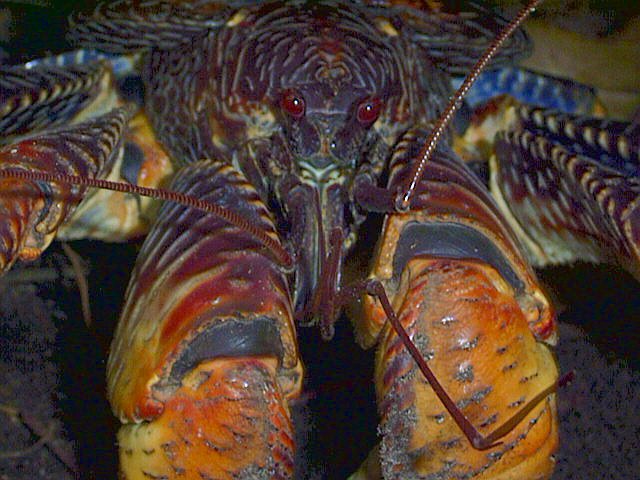
"The coconut crab, Birgus latro, is a species of terrestrial hermit crab, also known as the robber crab or palm thief. It is the largest land-living arthropod in the world, and is probably at the upper size limit for terrestrial animals with exoskeletons in recent Earth atmosphere, with a weight of up to 4.1 kg (9.0 lb). It can grow to up to 1 m (3 ft 3 in) in length from leg to leg. It is found on islands across the Indian Ocean and parts of the Pacific Ocean as far east as the Gambier Islands mirroring the distribution of the coconut palm; it has been extirpated from most areas with a significant human population, including mainland Australia and Madagascar.
The coconut crab is the only species of the genus Birgus, and is related to the terrestrial hermit crabs of the genus Coenobita. It shows a number of adaptations to life on land. Like hermit crabs, juvenile coconut crabs use empty gastropod shells for protection, but the adults develop a tough exoskeleton on their abdomen and stop carrying a shell. Coconut crabs have organs known as "branchiostegal lungs", which are used instead of the vestigial gills for breathing. They cannot swim, and will drown if immersed in water for long. They have developed an acute sense of smell, which has developed convergently with that of insects, and which they use to find potential food sources. Mating occurs on dry land, but the females migrate to the sea to release their fertilized eggs as they hatch. The larvae are planktonic for 3–4 weeks, before settling to the sea floor and entering a gastropod shell. Sexual maturity is reached after about 5 years, and the total lifespan may be over 60 years.
Adult coconut crabs feed on fruits, nuts, seeds, and the pith of fallen trees, but will eat carrion and other organic matter opportunistically. The species is popularly associated with the coconut, and has been widely reported to climb trees to pick coconuts, which it then opens to eat the insides. While coconut crabs can climb trees, and can eventually open a coconut collectively; coconuts are not a significant part of their diet. Coconut crabs are hunted wherever they come into contact with people, and are subject to legal protection in some areas. In the absence of precise information, the IUCN lists the species as Data Deficient."
Tuesday, July 7, 2015
Have an Apology
Happy Tuesday!
Sorry for not posting a cute animal this morning. Here's a cute cat to make up for it:
My Adventures with the No Carb Diet
So, I'm on the No Carb Diet. Well, as "no" carb as I can get it. That means that I'm eating proteins, fat and a few low carb veggies, so my current diet consists of ham, chicken, beef jerky, green peppers, mushrooms, onions, hard boiled eggs, cheese, and nuts. Logan will be getting me a chard, kale and spinach salad mix on Thursday.
This isn't that much different from the diet I adopted about a month ago, which included fruits, milk, other veggies and some bread. I've been losing weight on this diet without much portion control and no loss in energy. It's also really fun, 'cause Logan gets me grapes with the seeds still in them, and I have as much fun spitting grape seeds and munching provolone as I do chowing down on seedy watermelon. I love every little reminder of my connection with this earth....
I got on the new diet for health reasons (I got tired of gaining weight, feeling tired and never being full), and I'm on the No Carb Diet for other health reasons.
The funniest thing about this diet is that it is the exact opposite of my college diet, which was mostly carbs. A diet high in carbs makes me feel sluggish and bloated, my blood sugar spikes and drops, I eat till I get sick on sugar without ever feeling really full and my body never feels satisfied.
On the new diet of all the foods I actually like, especially the fruits and veggies, I feel fuller sooner, my blood sugar is much steadier and I actually get to the point where I don't feel the urge to shove food into my mouth the instant it presents itself (which is a side affect of the insidious corn syrup). I started losing weight without any lifestyle change and I enjoy my food a lot more.
This No Carb Diet, though, man. I started it Sunday afternoon, so I've only been on it for about two days. But even in that time period, I've noticed how different it is. For one thing, I'm constantly thinking about carbacious foods (no, that's not actually a word), like my grapes, and apples, and carrots, and beans, and rice and nice, hot fresh bread.... and crackers. MmmMMMmmmm. And then there is the fact that I finally learned to eat only after I got hungry, but can't do that on this diet. I've eaten till my stomach started to hurt and my blood sugar didn't change. Turns out, it takes longer to digest meat and tough veggies, so blood sugar doesn't change for a while after eating (who would'a guessed?). So, I'm going to have to learn to eat before I get hungry. The other thing is that I feel lighter, emptier, and not bloated, and my energy levels are stable.
The best experiment happened today, though, when I cheated on my diet and ate a piece of cake. One of my coworkers had a birthday today, and my not-boss got her a chocolate cake. I decided to get a little piece, carry it to my desk, and throw it away when no one was looking. Hoorah! for upholding social expectations without breaking the rules of my diet!!
Heh. That was a great excuse to get carbs! I just had to taste the chocolate icing, and it was actually good! And then I bit the cake... and it was actually good, too (I don't normally enjoy cake, much less store-bought cake). Aaaaaaaand, I'd hadn't had sugar in so long!! (Since Saturday, as a matter of fact.)
Oh, but the effects of that compromise were almost immediate. It was a fantastic progression of misery. First, it tasted really good (not amazing, 'cause it was still cake), then my blood sugar shot straight up and something that claimed to be an internal organ started to complain. Then I got bloated, felt lethargic and antsy at the same time, and then alternated between wanting to cry that I had to start my diet over (I have to go a straight seven days), wanting to laugh that I been handed something I may have been tempted to steal, and wanting to cry because of my pitiable lack of self-control. Then I just felt sick.
So, the diet started over this evening with ham and cooked green peppers, onions and mushrooms.
I was promised I could have spaghetti, meatballs and garlic toast for my first non-No Carb Diet meal. After today's experience, I may just settle down with a glass of milk.
This isn't that much different from the diet I adopted about a month ago, which included fruits, milk, other veggies and some bread. I've been losing weight on this diet without much portion control and no loss in energy. It's also really fun, 'cause Logan gets me grapes with the seeds still in them, and I have as much fun spitting grape seeds and munching provolone as I do chowing down on seedy watermelon. I love every little reminder of my connection with this earth....
I got on the new diet for health reasons (I got tired of gaining weight, feeling tired and never being full), and I'm on the No Carb Diet for other health reasons.
The funniest thing about this diet is that it is the exact opposite of my college diet, which was mostly carbs. A diet high in carbs makes me feel sluggish and bloated, my blood sugar spikes and drops, I eat till I get sick on sugar without ever feeling really full and my body never feels satisfied.
On the new diet of all the foods I actually like, especially the fruits and veggies, I feel fuller sooner, my blood sugar is much steadier and I actually get to the point where I don't feel the urge to shove food into my mouth the instant it presents itself (which is a side affect of the insidious corn syrup). I started losing weight without any lifestyle change and I enjoy my food a lot more.
This No Carb Diet, though, man. I started it Sunday afternoon, so I've only been on it for about two days. But even in that time period, I've noticed how different it is. For one thing, I'm constantly thinking about carbacious foods (no, that's not actually a word), like my grapes, and apples, and carrots, and beans, and rice and nice, hot fresh bread.... and crackers. MmmMMMmmmm. And then there is the fact that I finally learned to eat only after I got hungry, but can't do that on this diet. I've eaten till my stomach started to hurt and my blood sugar didn't change. Turns out, it takes longer to digest meat and tough veggies, so blood sugar doesn't change for a while after eating (who would'a guessed?). So, I'm going to have to learn to eat before I get hungry. The other thing is that I feel lighter, emptier, and not bloated, and my energy levels are stable.
The best experiment happened today, though, when I cheated on my diet and ate a piece of cake. One of my coworkers had a birthday today, and my not-boss got her a chocolate cake. I decided to get a little piece, carry it to my desk, and throw it away when no one was looking. Hoorah! for upholding social expectations without breaking the rules of my diet!!
Heh. That was a great excuse to get carbs! I just had to taste the chocolate icing, and it was actually good! And then I bit the cake... and it was actually good, too (I don't normally enjoy cake, much less store-bought cake). Aaaaaaaand, I'd hadn't had sugar in so long!! (Since Saturday, as a matter of fact.)
Oh, but the effects of that compromise were almost immediate. It was a fantastic progression of misery. First, it tasted really good (not amazing, 'cause it was still cake), then my blood sugar shot straight up and something that claimed to be an internal organ started to complain. Then I got bloated, felt lethargic and antsy at the same time, and then alternated between wanting to cry that I had to start my diet over (I have to go a straight seven days), wanting to laugh that I been handed something I may have been tempted to steal, and wanting to cry because of my pitiable lack of self-control. Then I just felt sick.
So, the diet started over this evening with ham and cooked green peppers, onions and mushrooms.
I was promised I could have spaghetti, meatballs and garlic toast for my first non-No Carb Diet meal. After today's experience, I may just settle down with a glass of milk.
Monday, July 6, 2015
Christian Preachers Brutally Beaten at Gay Pride Festival
http://radio.foxnews.com/toddstarnes/top-stories/christian-preachers-brutally-beaten-at-gay-pride-festival.html
"Two street preachers were brutally beaten — punched and kicked — by a crowd at a gay pride festival in Seattle and the entire melee was captured on video.
The preachers were holding signs reading “Repent or Else” and “Jesus Saves From Sin.” The video shows a group of people initially screaming and threatening the men during Pridefest at the Seattle Space Needle.
Television station KOMO reported that some of the attackers belonged to a group called NOH8
A group of women tried to steal their signs but were unsuccessful. The video then shows a group of men grabbing onto one of the preacher’s signs and dragging him to the ground. At some point he was punched in the back of the head a number of times while others can be seen kicking the man.
Another preacher was sucker punched in the back of the head."
In case you were wondering if this ever happens......
LaVoice Update - Susan
Hello, Cool People.
Since I got Friday off work, Logan, Andrew and I went to Chattanooga to visit my family. We left around 7:30 pm on Thursday and arrived around 1:30/2 am.
We slept in on Friday, went for a walk on Missionary Ridge in the rain with Mom, Amy (older sister) and Grace (youngest sister), introduced Grace to Steven Universe and ate tasty food. Grace introduced us to a book called The Little Prince, and I greatly recommend reading it if you can.
Mom packed that evening for her trip to CO to visit Sarah (younger sister who is having a baby soon!) and we wished her off at 5 am Saturday morning.
Logan and I stayed up for a minute to talk, then went back to bed for a couple of hours. We got up around 10 am to get ready to go to my Grandparents Wrights in Scottsboro, AL, to visit and grill hot dogs. The day was absolutely beautiful; the sky was full of clouds, there was an almost constant breeze and everything was brilliant green from all the rain they've been getting. After our late lunch and homemade ice cream, Logan, Andrew, Grace and I went out into the woods to visit the massive waterfall. I saw a caterpillar and some cool mushrooms, too.
Then we packed up and drove the two hours home, and were then too tired to think straight. So we sat around while Amy made more tasty food (fried squash, corn on the cob and hamburger patties) and went to bed around 11 pm.
Sunday started out as slowly as Saturday had ended. Logan and I ended up going to my Dad's church, which was really cool. Then we went home, ate lunch (spaghetti, prepared by older brother Daniel) packed up and left for Memphis.
We got home around 8 pm, unpacked, showered and went to bed. Our cat was very glad to see us and couldn't decide if he wanted to go outside and explore or stay inside and welcome us home.
Have a Banded Mongoose
Happy Monday!
"The banded mongoose (Mungos mungo) is a mongoose commonly found in the central and eastern parts of Africa. It lives in savannas, open forests and grasslands and feeds primarily on beetles and millipedes. Mongooses use various types of dens for shelter including termite mounds. While most mongoose species live solitary lives, the banded mongoose live in colonies with a complex social structure.
They will also live in rock shelters, thickets, gullies, and warrens under bushes. Mongooses prefer multi-entranced termitaria with open thicket, averaging 4 m from the nearest shelter, located in semi-closed woodland. In contrast to the den of the dwarf mongoose, banded mongoose dens are less dependent on vegetation cover and have more entrances. Banded mongooses live in larger groups than dwarf mongooses and this more entrances means more members have access to the den and ventilation. The development of agriculture in the continent has had a positive influence on the number of banded mongooses. The crops of the farmland serve as an extra food source.
Banded mongoose feed primarily on insects, myriapods, small reptiles, and birds. Millipedes and beetles made of most of their diet, but they also commonly eat ants, crickets, termites, grasshoppers, caterpillars and earwigs. Other prey items of the mongoose includes frogs, lizards, small snakes, ground bird and the eggs of both birds and reptiles. On some occasions, mongooses will drink water from rain pools and lake shores.
Banded mongoose forage in groups but each member searches for food alone. They forage in the morning for several hours and then rest in the shade. They will usually forage again in the late afternoon. Mongooses use their sense of smell to locate their prey and dig them out with their long claws, both in holes in the ground and holes in trees. Mongoose will also frequent near the dung of large herbivores since they attract beetles. Low grunts are produced every few seconds for communication. Mongoose also feed individually and are not cooperative feeders. When hunting prey that secrete toxins, mongooses will roll them on the ground. Durable prey is thrown on hard surfaces.
Banded mongooses live in mixed-sex groups of 7–40 individuals (average around 20). Groups sleep together at night in underground dens, often abandoned termite mounds, and change dens frequently (every 2–3 days). When no refuge is available and hard-pressed by predators such as wild dogs, the group will form a compact arrangement in which they lie on each other with heads facing outwards and upwards.
There is generally no strict hierarchy in mongoose groups and aggression is low. Sometimes, mongoose may squabble over a food. However, typically, the one who claims the food first wins. Most aggression and hierarchical behavior occurs between males when females are in oestrus. Female are usually not aggressive but do live in hierarchies based on age. The older females have earlier estrous periods and have larger litters. When groups get too large, some females are forced out of the group by either older females or males. These females may form new groups with subordinate males.
Relations between groups are highly aggressive and mongooses are sometimes killed and injured during intergroup encounters. Nevertheless, breeding females will often mate with males from a rival groups during fights. Mongooses establish their territories with scent markings that may also serve as communication between those in the same group."
~Wikipedia.org
"The banded mongoose (Mungos mungo) is a mongoose commonly found in the central and eastern parts of Africa. It lives in savannas, open forests and grasslands and feeds primarily on beetles and millipedes. Mongooses use various types of dens for shelter including termite mounds. While most mongoose species live solitary lives, the banded mongoose live in colonies with a complex social structure.
They will also live in rock shelters, thickets, gullies, and warrens under bushes. Mongooses prefer multi-entranced termitaria with open thicket, averaging 4 m from the nearest shelter, located in semi-closed woodland. In contrast to the den of the dwarf mongoose, banded mongoose dens are less dependent on vegetation cover and have more entrances. Banded mongooses live in larger groups than dwarf mongooses and this more entrances means more members have access to the den and ventilation. The development of agriculture in the continent has had a positive influence on the number of banded mongooses. The crops of the farmland serve as an extra food source.
Banded mongoose feed primarily on insects, myriapods, small reptiles, and birds. Millipedes and beetles made of most of their diet, but they also commonly eat ants, crickets, termites, grasshoppers, caterpillars and earwigs. Other prey items of the mongoose includes frogs, lizards, small snakes, ground bird and the eggs of both birds and reptiles. On some occasions, mongooses will drink water from rain pools and lake shores.
Banded mongoose forage in groups but each member searches for food alone. They forage in the morning for several hours and then rest in the shade. They will usually forage again in the late afternoon. Mongooses use their sense of smell to locate their prey and dig them out with their long claws, both in holes in the ground and holes in trees. Mongoose will also frequent near the dung of large herbivores since they attract beetles. Low grunts are produced every few seconds for communication. Mongoose also feed individually and are not cooperative feeders. When hunting prey that secrete toxins, mongooses will roll them on the ground. Durable prey is thrown on hard surfaces.
Banded mongooses live in mixed-sex groups of 7–40 individuals (average around 20). Groups sleep together at night in underground dens, often abandoned termite mounds, and change dens frequently (every 2–3 days). When no refuge is available and hard-pressed by predators such as wild dogs, the group will form a compact arrangement in which they lie on each other with heads facing outwards and upwards.
There is generally no strict hierarchy in mongoose groups and aggression is low. Sometimes, mongoose may squabble over a food. However, typically, the one who claims the food first wins. Most aggression and hierarchical behavior occurs between males when females are in oestrus. Female are usually not aggressive but do live in hierarchies based on age. The older females have earlier estrous periods and have larger litters. When groups get too large, some females are forced out of the group by either older females or males. These females may form new groups with subordinate males.
Relations between groups are highly aggressive and mongooses are sometimes killed and injured during intergroup encounters. Nevertheless, breeding females will often mate with males from a rival groups during fights. Mongooses establish their territories with scent markings that may also serve as communication between those in the same group."
~Wikipedia.org
Thursday, July 2, 2015
Have a Red Panda
Happy Thursday!
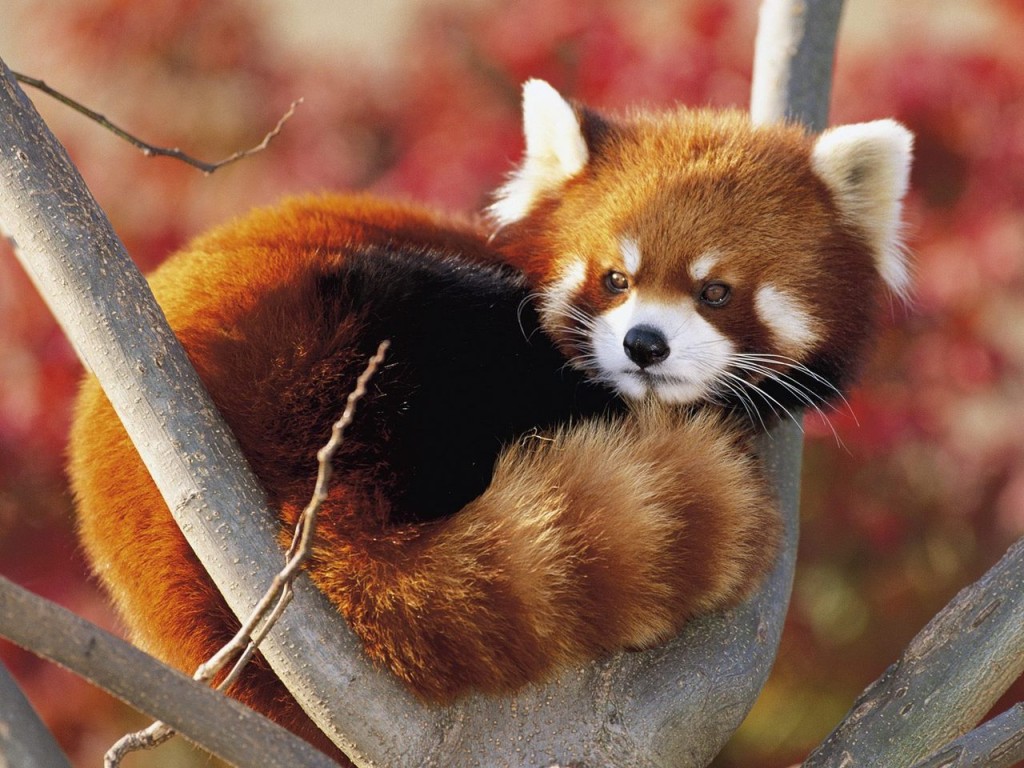
"The red panda (Ailurus fulgens), also called lesser panda, red bear-cat and red cat-bear, is a small arboreal mammal native to the eastern Himalayas and south-western China that has been classified as vulnerable by IUCN as its wild population is estimated at less than 10,000 mature individuals. The population continues to decline and is threatened by habitat loss and fragmentation, poaching, and inbreeding depression, although red pandas are protected by national laws in their range countries.
The red panda is slightly larger than a domestic cat. It has reddish-brown fur, a long, shaggy tail, and a waddling gait due to its shorter front legs. It feeds mainly on bamboo, but is omnivorous and also eats eggs, birds, insects, and small mammals. It is a solitary animal, mainly active from dusk to dawn, and is largely sedentary during the day.
The red panda is the only living species of the genus Ailurus and the family Ailuridae. ...which along with the weasel, raccoon and skunk families is part of the superfamily Musteloidea. Two subspecies are recognized. It is not closely related to the giant panda.
The red panda is territorial; it is solitary except during mating season. The species is generally quiet except for some twittering, tweeting, and whistling communication sounds. It has been reported to be both nocturnal and crepuscular, sleeping on tree branches or in tree hollows during the day and increasing its activity in the late afternoon and early evening hours. It sleeps stretched out on a branch with legs dangling when it is hot, and curled up with its tail over the face when it is cold. This panda is very heat sensitive, with an optimal “well-being” temperature between 17 and 25 °C (63 and 77 °F), and cannot tolerate temperatures over 25 °C (77 °F).
Red panda standing
Shortly after waking, red pandas clean their fur like a cat, licking their front paws and then rubbing their backs, stomachs and sides. They also rub their backs and bellies along the sides of trees or rocks. Then they patrol their territories, marking with urine and a weak musk-smelling secretion from their anal glands. They search for food running along the ground or through the trees. Red pandas may alternately use their forepaws to bring food to their mouths or place food directly into their mouths.
Predators of the red panda include the snow leopard, martens (Mustelidae), and humans. If they feel threatened or sense danger, they may try to escape by climbing a rock column or tree. If they can no longer flee, they stand on their hind legs to make themselves appear larger and use the sharp claws on their front paws to defend themselves.
Red pandas are excellent climbers, and forage largely in trees. They eat mostly bamboo, and may eat small mammals, birds, eggs, flowers and berries. In captivity, they were observed to eat birds, flowers, maple and mulberry leaves, and bark and fruits of maple, beech and mulberry.
Like the giant panda, they cannot digest cellulose, so they must consume a large volume of bamboo to survive. Their diets consist of about two-thirds bamboo, but they also eat mushrooms, roots, acorns, lichen and grasses. Occasionally, they supplement their diets with fish and insects."
~Wikipedia.org
"The red panda (Ailurus fulgens), also called lesser panda, red bear-cat and red cat-bear, is a small arboreal mammal native to the eastern Himalayas and south-western China that has been classified as vulnerable by IUCN as its wild population is estimated at less than 10,000 mature individuals. The population continues to decline and is threatened by habitat loss and fragmentation, poaching, and inbreeding depression, although red pandas are protected by national laws in their range countries.
The red panda is slightly larger than a domestic cat. It has reddish-brown fur, a long, shaggy tail, and a waddling gait due to its shorter front legs. It feeds mainly on bamboo, but is omnivorous and also eats eggs, birds, insects, and small mammals. It is a solitary animal, mainly active from dusk to dawn, and is largely sedentary during the day.
The red panda is the only living species of the genus Ailurus and the family Ailuridae. ...which along with the weasel, raccoon and skunk families is part of the superfamily Musteloidea. Two subspecies are recognized. It is not closely related to the giant panda.
The red panda is territorial; it is solitary except during mating season. The species is generally quiet except for some twittering, tweeting, and whistling communication sounds. It has been reported to be both nocturnal and crepuscular, sleeping on tree branches or in tree hollows during the day and increasing its activity in the late afternoon and early evening hours. It sleeps stretched out on a branch with legs dangling when it is hot, and curled up with its tail over the face when it is cold. This panda is very heat sensitive, with an optimal “well-being” temperature between 17 and 25 °C (63 and 77 °F), and cannot tolerate temperatures over 25 °C (77 °F).
Red panda standing
Shortly after waking, red pandas clean their fur like a cat, licking their front paws and then rubbing their backs, stomachs and sides. They also rub their backs and bellies along the sides of trees or rocks. Then they patrol their territories, marking with urine and a weak musk-smelling secretion from their anal glands. They search for food running along the ground or through the trees. Red pandas may alternately use their forepaws to bring food to their mouths or place food directly into their mouths.
Predators of the red panda include the snow leopard, martens (Mustelidae), and humans. If they feel threatened or sense danger, they may try to escape by climbing a rock column or tree. If they can no longer flee, they stand on their hind legs to make themselves appear larger and use the sharp claws on their front paws to defend themselves.
Red pandas are excellent climbers, and forage largely in trees. They eat mostly bamboo, and may eat small mammals, birds, eggs, flowers and berries. In captivity, they were observed to eat birds, flowers, maple and mulberry leaves, and bark and fruits of maple, beech and mulberry.
Like the giant panda, they cannot digest cellulose, so they must consume a large volume of bamboo to survive. Their diets consist of about two-thirds bamboo, but they also eat mushrooms, roots, acorns, lichen and grasses. Occasionally, they supplement their diets with fish and insects."
~Wikipedia.org
Wednesday, July 1, 2015
Have a Giant Darner Dragonfly
Happy Wednesday!
Adult males vigorously defend territories near water; these areas provide suitable habitat for the larvae to develop, and for females to lay their eggs. Swarms of feeding adults aggregate to prey on swarming prey such as emerging flying ants or termites.
Dragonflies as a group occupy a considerable variety of habitats, but many species, and some families, have their own specific environmental requirements. Some species prefer flowing waters while others prefer standing water. For example, the Gomphidae (clubtails) live in running water, the Libellulidae (skimmers) in still water. ... Vegetation and its characteristics including submerged, floating, emergent, or waterside are also important. Adults may require emergent or waterside plants to use as perches; others may need specific submerged or floating plants in which to lay eggs. Requirements may be highly specific, as in Aeshna viridis (green hawker) which lives in swamps with the water-soldier, Stratiotes aloides. The chemistry of the water, including its trophic status (degree of enrichment with nutrients) and pH can also affect its use by dragonflies. Most species need moderate conditions, not too eutrophic, not too acid; a few species such as Sympetrum danae (black darter) and Libellula quadrimaculata (four-spotted chaser) prefer acidic waters such as peat bogs, while others such as Libellula fulva (scarce chaser) need slow-moving, eutrophic waters with reeds or similar waterside plants.
Dragonflies are hemimetabolous insects; they do not have a pupal stage and undergo an incomplete metamorphosis with a series of nymphal stages from which the adult emerges."
~Wikipedia.org
Just a side note... I've had the unfortunate experience of watching a dragonfly die. The light in its eyes went out.
This giant darner is cleaning his face.
These dragonflies are the largest in the US.
"A dragonfly is an insect belonging to the order Odonata, suborder Anisoptera (from Greek ανισος anisos "uneven" + πτερος pteros, "wings", because the hindwing is broader than the forewing). Adult dragonflies are characterized by large multifaceted eyes, two pairs of strong transparent wings, sometimes with coloured patches, and an elongated body.
Dragonflies and damselflies are predatory both in the aquatic nymphal and adult stages. Nymphs feed on a range of freshwater invertebrates and larger ones can prey on tadpoles and small fish. Adults capture insect prey in the air, making use of their acute vision and highly controlled flight. The mating system of dragonflies is complex and are among the few insect groups that have a system of indirect sperm transfer along with sperm storage, delayed fertilization and sperm competition.
Adult males vigorously defend territories near water; these areas provide suitable habitat for the larvae to develop, and for females to lay their eggs. Swarms of feeding adults aggregate to prey on swarming prey such as emerging flying ants or termites.
Dragonflies as a group occupy a considerable variety of habitats, but many species, and some families, have their own specific environmental requirements. Some species prefer flowing waters while others prefer standing water. For example, the Gomphidae (clubtails) live in running water, the Libellulidae (skimmers) in still water. ... Vegetation and its characteristics including submerged, floating, emergent, or waterside are also important. Adults may require emergent or waterside plants to use as perches; others may need specific submerged or floating plants in which to lay eggs. Requirements may be highly specific, as in Aeshna viridis (green hawker) which lives in swamps with the water-soldier, Stratiotes aloides. The chemistry of the water, including its trophic status (degree of enrichment with nutrients) and pH can also affect its use by dragonflies. Most species need moderate conditions, not too eutrophic, not too acid; a few species such as Sympetrum danae (black darter) and Libellula quadrimaculata (four-spotted chaser) prefer acidic waters such as peat bogs, while others such as Libellula fulva (scarce chaser) need slow-moving, eutrophic waters with reeds or similar waterside plants.
Dragonflies are hemimetabolous insects; they do not have a pupal stage and undergo an incomplete metamorphosis with a series of nymphal stages from which the adult emerges."
~Wikipedia.org
Just a side note... I've had the unfortunate experience of watching a dragonfly die. The light in its eyes went out.
Subscribe to:
Comments (Atom)